


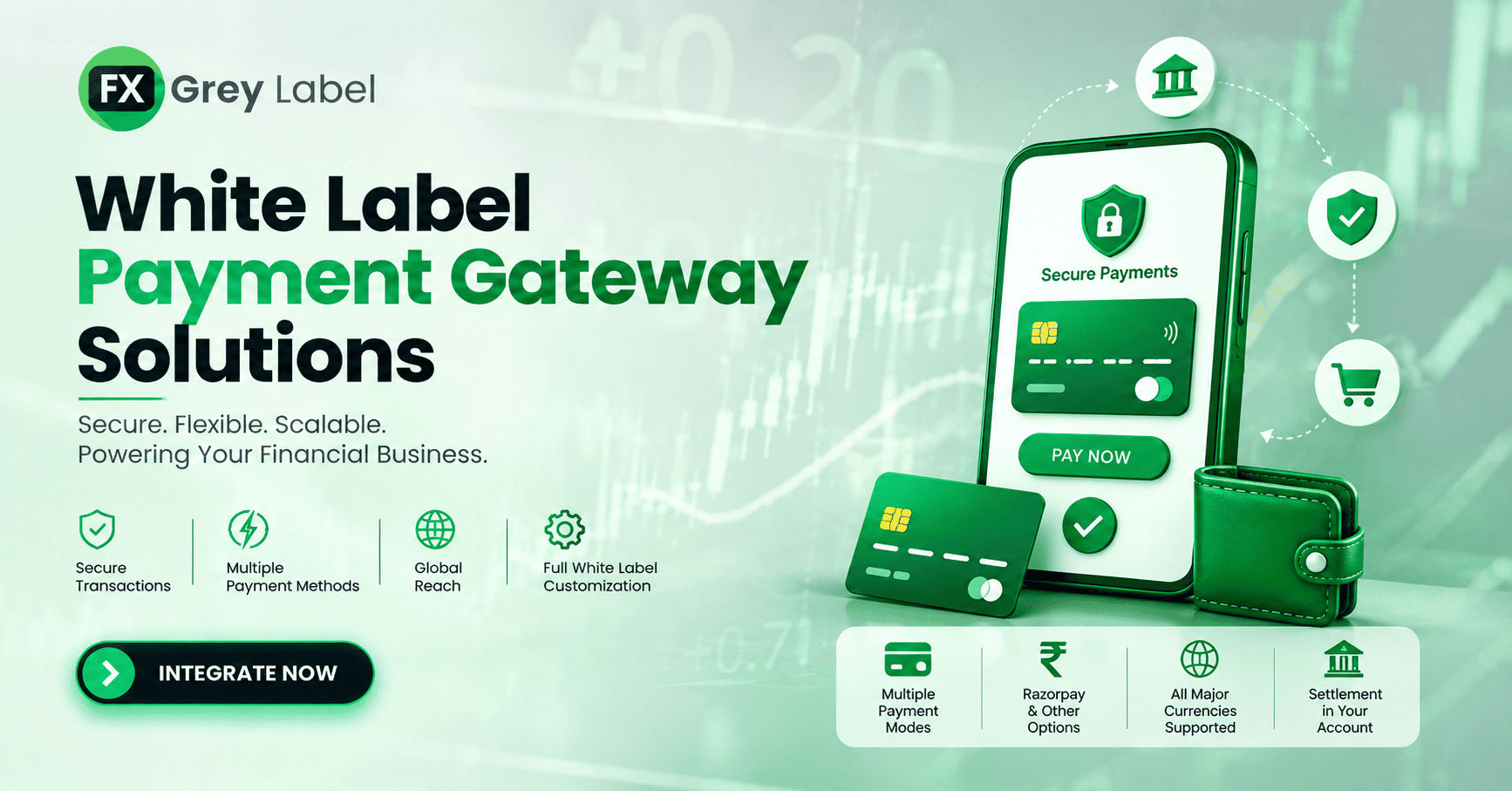
This typically involves the use of a payment gateway. Payment gateways charge a fee for their service. Payment service providers must help their clients by giving them the means to facilitate payment processing.
For businesses that want to offer payment services under their own brand, a white label payment gateway provides the opportunity to use someone else’s payment processing solution, and lets them focus on promoting the service and growing their business.
Instead of wasting time and money developing their own payment processing solution, businesses can partner with a service provider, and concentrate on serving their clients, planning growth and expansion.
A white label payment gateway allows businesses to offer payment gateway services under their brand using a system built by another entity.
White label payment gateways give businesses the ability to integrate a payment processing solution without processing a payment under the payment processor’s brand. Using a white label payment gateway allows a business to brand the payment processing solution with their logo and dashboard. The amount of control and flexibility offered by a white label payment gateway depends on the agreement.
The White label payment gateway model is well-suited for fintech’s, software businesses, payment service providers, and other businesses wanting to operate in the digital payments space, but without the need to build each element of the ecosystem by themselves.
An example is a business offering payment services to merchants, and using a service partner for the core payment gateway infrastructure.
A White label payment gateway integrates a business’ payment processing system with the checkout or payment processing system of the business’ website.
The payment process is made up of the following steps:
There can be variations in the steps of the payment flow based on the payment methods, partners and payment processing infrastructure used by the payment service provider .
A white label arrangement gives a business an opportunity to offer payment processing services to its customers using its own identity and agreement service and payment partners .
White Label payment processing allows businesses to launch their own payment services without having to build and maintain payment service infrastructure .
There are many benefits of using white label payment processing including:
The difference between a good brand and a great brand is customer loyalty. Customer loyalty is achieved by consistently providing the same brand experience.
Brands can create that experience by implementing a white label payment solution . A white label payment solution gives brands the ability to seamlessly integrate their payment processing within their own, distinct, branded user experience.
Building payment infrastructure takes time, and while you build payment infrastructure for your business, you may need to build other parts of your business too.
Using a payments platform allows businesses to bring new payment services to market without having to build payment infrastructure and help businesses focus on their core business.
How long it takes to build a payment service depends on how integrated you want to be and how customized your payment service is. Also, you may have to complete compliance checks and get payment partner approvals.
There are different ways to pay around the world. With different banks, payment processors, and locations, payment gateways can support different payment methods.
Before selecting a solution, companies should investigate which payment methods are supported in which locations to determine if the payment gateway solution will satisfy their business needs.
There are tools which help companies manage multiple merchant accounts through a single platform to process transactions and reconcile settlements and refunds, and generate reports.
These solutions can assist in streamlining the management of these activities through an integrated dashboard.
There are multiple ways to monetize a payment solution. These can include transaction or service fees, subscription fees, or other monetization methods.
Revenue potential is determined by business and industry conditions, processing costs, customer needs, competition, legal restrictions and regulations, and a myriad of other factors. A white label solution does not guarantee profitability.
A white label payment platform is a system that allows a company to provide payment services to its customers while operating under the company's brand.
Some of the features that may be provided by a white label payment platform are:
A white label payment platform may not provide all the above features, and therefore it is important for a business to understand exactly what is provided by a white label payment platform before selecting it.
Forex CRM payment should be able to support the company's payment model and the anticipated volume of transactions, and be flexible to meet the needs of the company's business and growth strategies.
Finding the right white label payment gateway provider is one of the most critical elements in starting your payment service.
You need to evaluate if the provider has an adequate platform, reasonable commercial terms and if they will provide the necessary support. It is equally as important to understand which responsibilities you will have to handle and which ones the provider and/or payment partners will have to handle.
Here are some elements you should evaluate before choosing a white label payment service provider.
You will work with data involving payments and transactions. Figure out which parties are responsible for meeting payment security standards. The onus is on you to ensure you meet the requirements to be compliant with payment security and with fraud protection. Requirements vary and are different in different jurisdictions. Using a white label payment service provider does not mean you are automatically compliant.
See if the payment service provider’s platform integrates with your website, mobile app, and accounting systems.
Integration benefits from good documentation and technical support. It helps to have some sense about the impact of customization on pricing.
To serve international customers, you should find out which countries, currencies, payment and settlement methods are supported.
Cross border payments can incur added costs, be subject to currency conversions and regulations.
Integration costs are passed on to clients. Learn the total cost before signing a contract. Fees and minimum transaction volumes are included in contracts.
Find out about chargeback and refund policies as well as constraints on the types of businesses you can serve.
Your business is constantly changing and payment processing must also be flexible to adapt to and keep pace with the changes. The processing must ensure secure and quick transaction processing.
white label payment processing must support expected business growth for a significant time before it can be replaced.
Businesses that want to provide branded payment services but don't want to build the whole payment service system from scratch may want to look into white label payment gateways . It could work for fintech startups and merchant service providers.
But first, analyze your business model. Determine who will be using your payment service, which payment methods you will be providing, what regulations will affect you, how will your payment service make money, etc.
Shop around and ask for a complete, clear breakdown of features and costs, as well as what they won't be providing and what the limitations will be.
A White Label Payment Gateway allows your business to provide payment services through your existing software and systems. This helps streamline and simplify payment processes.
The right White Label Payment Gateway for your business would be the one that fulfills your requirements based on your target market, payment methods, and your budget.
Prior to choosing a White Label Payment Gateway , ensure you understand your responsibilities in terms of payment compliance and consider the costs associated with the service as well as other agreements.
Integrating a Payment Gateway into your systems may seem daunting but a good Payment Gateway Integration can lay a good foundation for additional Payment Services in the future.
White label payment gateway solutions are systems provided by payment services that let businesses offer payment services under their brand name. These can help businesses launch more quickly by not having to construct a payment system from scratch.
A White label payment gateway processes payments invisibly to customers and merchants while connecting payment partners to the payment processing flow. It provides a vendor-neutral, fully functional payment processing system under the business’s branding.
There are a lot of factors that can affect pricing. Some examples are integrations, payment methods, pricing models, transactions fees, monthly subscriptions, and set up fees. It's important for businesses to go through all costs in order to identify the right payment solution for their business.
There are a number of factors to take into account when choosing a white label payment gateway provider including the payment methods supported, integrations, security features supported, API, transaction fees, settlement times, customer support, whether the payment processor shifts the burden of compliance to you, and more.
There are three main ways to generate revenue with white label payment processing; transaction fees, subscriptions and merchant services. Competition, cost, price and payment volume dictate success in the payment processing business .


With FXGreyLabel, you may experience the Power of Forex Excellence. Fill out the form below and one of our experts will connect with you.